Rice Husk Ash-Based 3D Printed Concrete Using Polyvinyl Alcohol Fibers for Sustainable Construction
We have all 3D-printed little plastic parts and toys, but how about printing a house and helping save the environment? One can say, well, why bother? Just pick one from the realtor's website (Phill Dunphy's a good one, I hear) and grab the keys when it's done. But to that, I will say, what if you want a really customised house, a look that turns heads (Zaha Hadid, my all-time fav), and somewhere very remote? What if we could just print it?
This project was done during an internship under the supervision of Dr Biranchi Panda in his lab at IIT Guwahati.
As a child, I used to reach for the CRT screen in an attempt to grab the toy shown in a TV commercial. What was once a child's innocent try has now become, more or less, a reality (in spirit). When you see a Coca-Cola ad, you simply Zepto it, and it's in your hands in less than 5 mins (I experienced that in Bengaluru, total shocker! ). The same goes for Amazon's same-day deliveries. For all intents and purposes, your consumption demands will be met very quickly (a well-orchestrated logistics game).
3D Printing has been around for some time now. When it was first introduced, I remember there was a lot of frenzy among companies, thinking they would be out of business soon if people could just print whatever they liked. That obviously hasn't happened (yet?). 3D printing, so far, has been limited to hobbyist use cases (more or less), but there are some advanced industrial uses too by Apple (iPhone Air charging port, Watch Ultra case) and Oppo (foldables). This whole idea of "Just print it" is why I am so passionate about it. Now, simple-sounding ideas are not so simple to make them work, so I still have enough work to do for my grad school (will I be able to attend grad school given the costs?). Moving on from smaller parts to bigger objects, like turbine blades, implants?
How about a house? One can say, well, pick one from the realtor's website (Phill Dunphy's a good one, I hear) and grab the keys when it's done. But to that I will say, what if you want a really customised house or a look that turns heads (Zaha Hadid, my all-time fav) and somewhere very remote? What if we could just print it?
During winters, a large amount of rice husk is burned in the northern region of India. And this activity leads to dangerous levels of pollution (close to smoking 2 packs of cigarettes a day). This is done mostly to prepare the land for a new harvest. Now, what if some portion of this rice husk is used to build houses? This question became my work for the internship.
The study shows that the mix containing 10% rice husk ash and 0.5% PVA fibre delivers the best overall performance for 3D-printed concrete. It achieved the highest 7-day compressive strength of 24.27 MPa while maintaining split tensile strength close to the control mix. The mix also provided printable slump-flow and stable 10-layer buildability, making it suitable for extrusion-based 3D printing. The improvement comes from RHA-driven pozzolanic densification and PVA crack-bridging, which together enhance strength and layer cohesion. Higher RHA (20%) or PVA (1%) reduced performance due to cement dilution, higher water demand, and probable fibre agglomeration.
Some 3D printed buildings
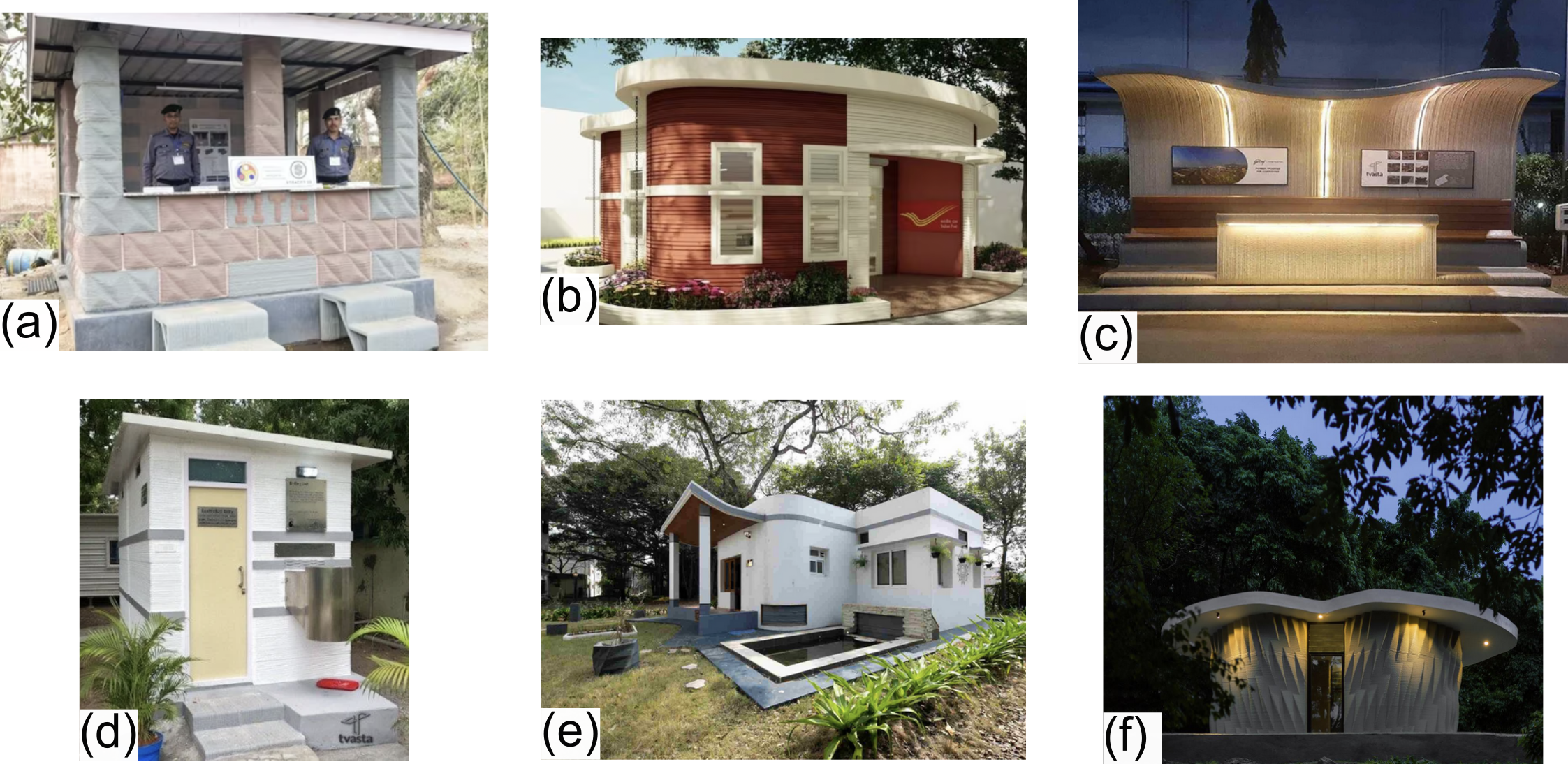
Project Pictures:
- Printed Cyldinrical Specimen
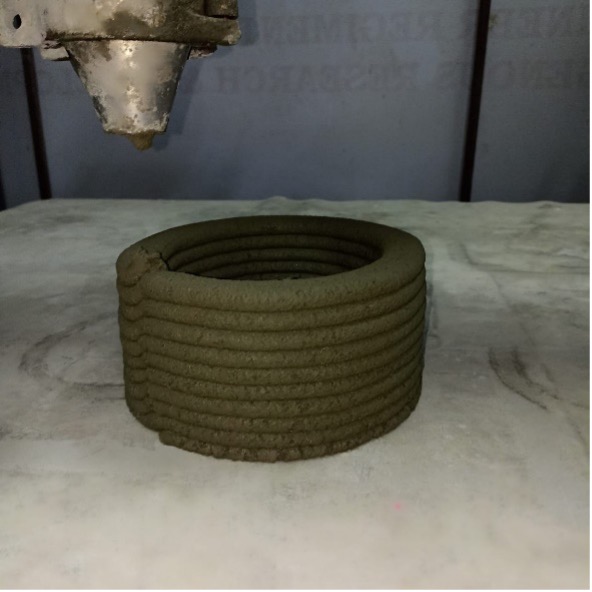
Printed Cyldinrical Specimen - Mechanical Testing
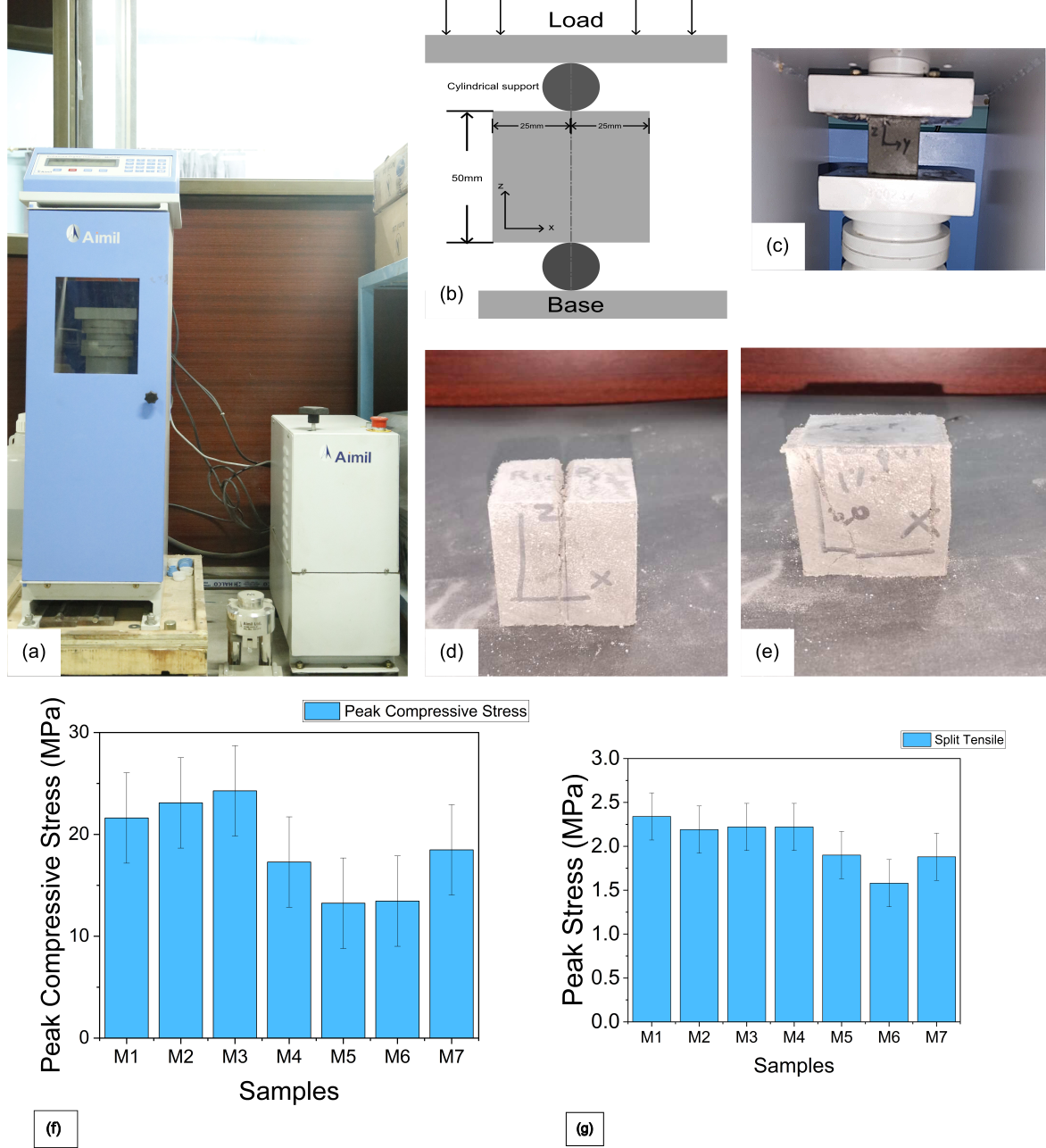
Mechanical Testing